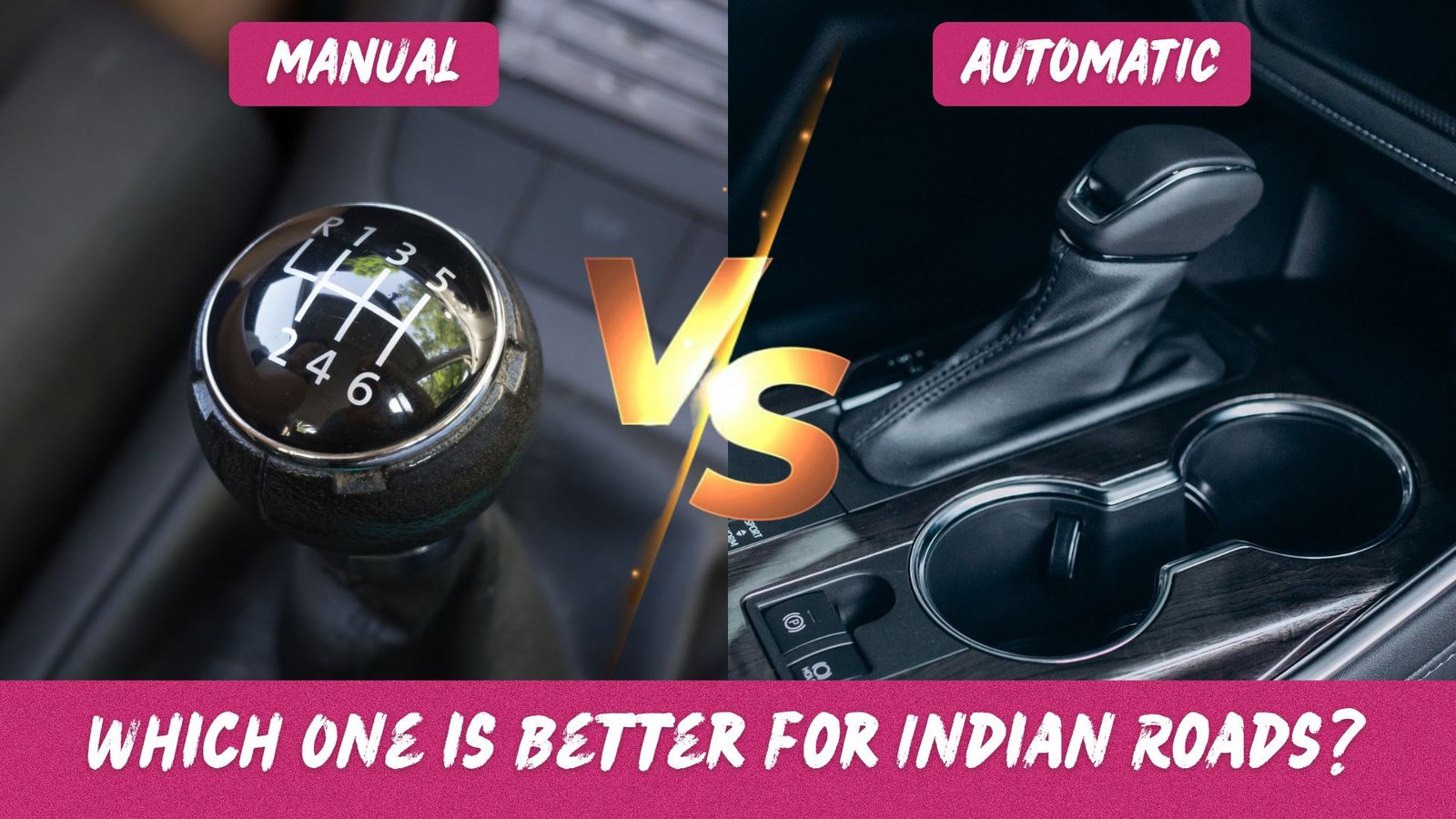
Buying a new car is exciting, but choosing the right transmission can often feel confusing. One of the biggest questions first-time buyers ask is whether they should choose an automatic vs manual car. While the answer may seem straightforward, the right transmission depends on your daily driving habits, budget and personal preferences.
A decade ago, manual cars dominated the Indian market because they were more affordable and offered better fuel efficiency. Automatic cars were usually available only in premium models and came at a significantly higher price. Today, the situation is very different. Almost every major car manufacturer in India offers automatic variants across hatchbacks, sedans and SUVs, making them more accessible than ever before.
However, manual cars continue to remain a popular choice for buyers who enjoy greater control, lower ownership costs and an engaging driving experience. On the other hand, automatic cars have become the preferred option for people who spend hours driving in city traffic and value convenience over constant gear shifting.
So, how do you decide which transmission is right for you?
The answer is not based on what your friends recommend or which option is currently trending. It depends on where you drive, how often you drive and what you expect from your car over the next five to seven years. In this guide, we compare automatic vs manual car options across every important factor, including purchase price, fuel efficiency, maintenance costs, driving comfort, highway performance, reliability, resale value and long-term ownership. By the end of this article, you’ll have a clear understanding of which transmission is better suited to your driving needs.
Quick Answer
If your daily commute involves heavy city traffic, an Automatic Car is generally the better choice because it eliminates frequent clutch operation and gear changes, making driving more comfortable and less tiring. However, if you mostly drive on highways, prefer complete control over your vehicle, or want a lower purchase price with potentially lower maintenance costs, a Manual Car remains an excellent choice.
In short:
- Choose a manual car if you prioritize affordability, driving involvement and highway performance.
- Choose an automatic car if you value convenience, comfort and stress-free driving in traffic.
🚗 AutoDesiHub Expert Tip
Don’t choose a transmission based on a short test drive alone. Think about your daily commute, weekend travel and long-term ownership costs. The best transmission is the one that suits your lifestyle—not someone else’s.
Table of Contents
Manual or Automatic Cars in India: Quick Comparison
| Features | Manual Transmission | Automatic Transmission |
| Purchase Price | More affordable | Usually Cost Higher |
| City Driving | Frequent clutch and gear changes | Smooth and convenient |
| Highway Driving | Better driver involvement | Comfortable for long journeys |
| Fuel Efficiency | Slight advantage in some models | Comparable in many modern cars |
| Maintenance Cost | Generally lower | Depends on the transmission type |
| Ease of Driving | Requires practice | Beginner-friendly |
| Driving Experience | More engaging | More relaxed |
| Traffic Comfort | Average | Excellent |
| Resale Demand | Strong | Growing rapidly in India |
| Best For | Budget-conscious buyers and enthusiasts | Families, city commuters and new drivers |
💡Did You Know?
Many entry-level cars in India are now available with automatic transmission options. This means buyers no longer have to choose a premium car just to enjoy the convenience of an automatic gearbox
Understanding Your Daily Driving Needs
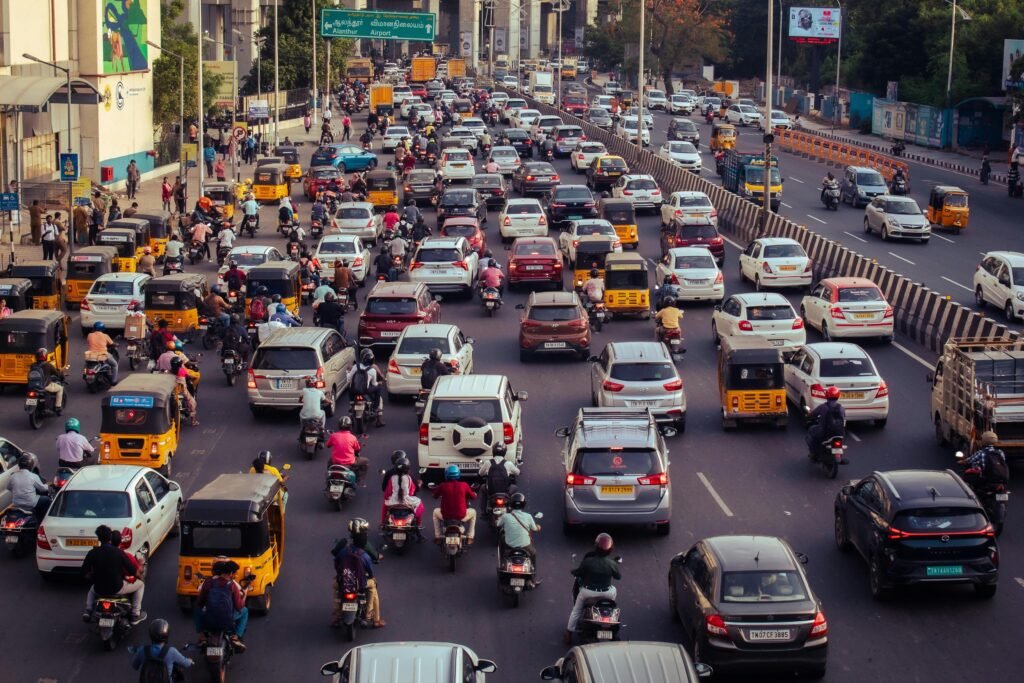
Before comparing transmissions in detail, ask yourself one simple question:
How do you actually use your car every day?
- Morning office traffic with frequent stops.
- School drop-offs and local errands.
- Slow-moving traffic signals.
- Narrow roads with constant braking and acceleration.
- Evening rush-hour congestion before reaching home.
In these situations, convenience often matters far more than outright performance. That’s why choosing the right transmission isn’t simply about engine specifications or mileage figures—it’s about reducing stress during the drives you make most often.
A Real-Life Example

Rahul – City Commuter
Drives 18 km to work every day through heavy city traffic. His journey takes nearly one hour each way, with frequent stops at traffic lights and long stretches of bumper-to-bumper traffic.
For Rahul, an automatic transmission makes everyday driving noticeably easier because he doesn’t have to constantly press the clutch or change gears.

Amit – Highway Commuter
Lives on the outskirts of the city and regularly drives on open highways with minimal traffic.
For Amit, a manual transmission can still be an excellent choice. It offers greater control, slightly better fuel efficiency, and a lower purchase price.
Choose the transmission that fits your driving needs—not what everyone else is buying
Manual Cars: The Traditional Indian Choice
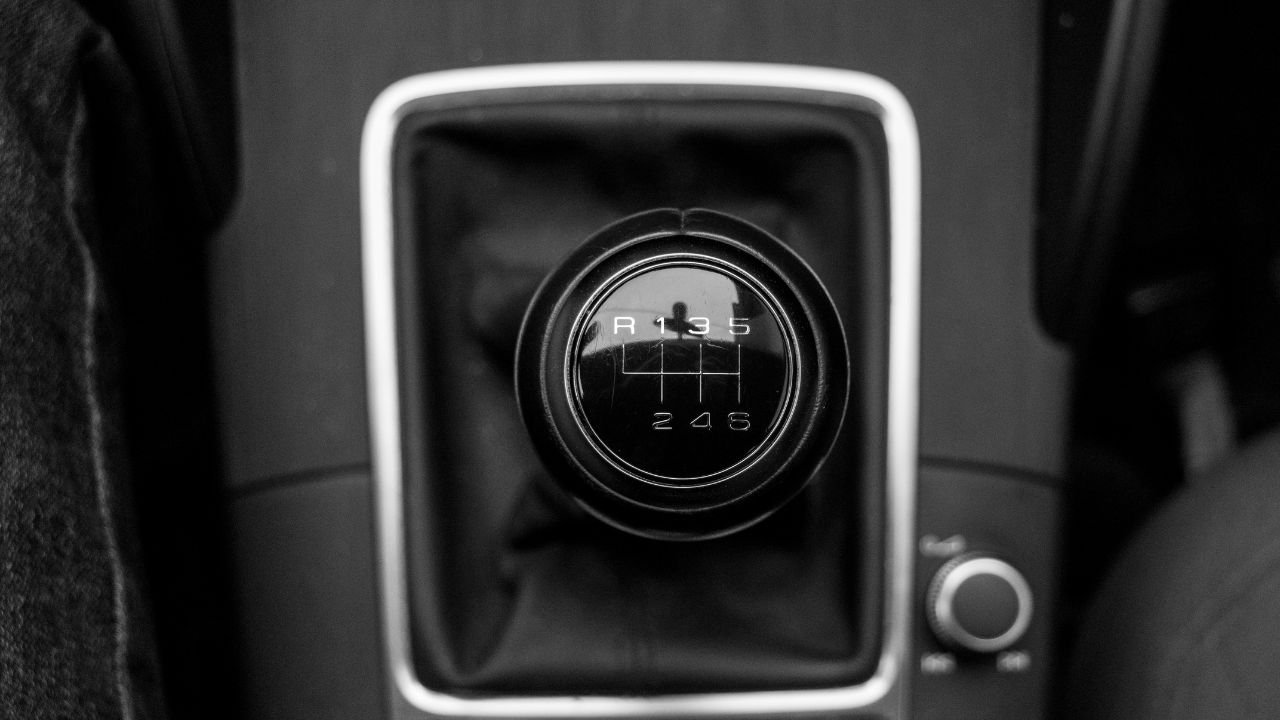
A manual car requires the driver to operate the clutch pedal and change gears using the gear lever. As the vehicle accelerates or slows down, the driver selects the appropriate gear based on engine speed and road conditions.
Because the driver has complete control over gear selection, manual cars are often considered more engaging to drive. They also have a simpler mechanical design, which is one of the reasons they remain popular among budget-conscious buyers and driving enthusiasts. Although automatic cars have gained popularity in recent years, manual transmission continues to be a preferred choice for many Indian buyers, particularly those who regularly drive on highways or want maximum value for their money.
How Does a Manual Transmission Work?
In a manual transmission, the engine transfers power to the gearbox through a clutch. Every time the driver presses the clutch pedal, the connection between the engine and the gearbox is temporarily disengaged, allowing a different gear to be selected.
The driver is responsible for choosing the correct gear based on the driving situation. Lower gears provide more power during acceleration or hill climbs, while higher gears improve fuel efficiency during highway cruising. Although it takes some practice to master, many experienced drivers appreciate the level of control that a manual transmission offers.
| Advantages of a Manual Car | Disadvantages of a Manual Car |
| Lower purchase price than automatic variants | Frequent clutch operation can become tiring in heavy traffic |
| Better control during overtaking and highway driving. | Requires more practice for new drivers |
| Simpler mechanical design. | Stop-and-go traffic demands constant gear changes. |
| Generally lower servicing and repair costs. | Clutch replacement is a regular maintenance expense over the vehicle’s lifetime. |
| Preferred by driving enthusiasts. | |
| Available across almost every budget segment. |
🚗 AutoDesiHub Expert Tip
If you mostly drive in cities with heavy traffic, such as Ahmedabad, Bengaluru, Delhi or Mumbai, think beyond the purchase price. The additional comfort offered by an automatic transmission may make daily commuting much more enjoyable.
Automatic Cars: Effortless Driving for Everyday Commutes
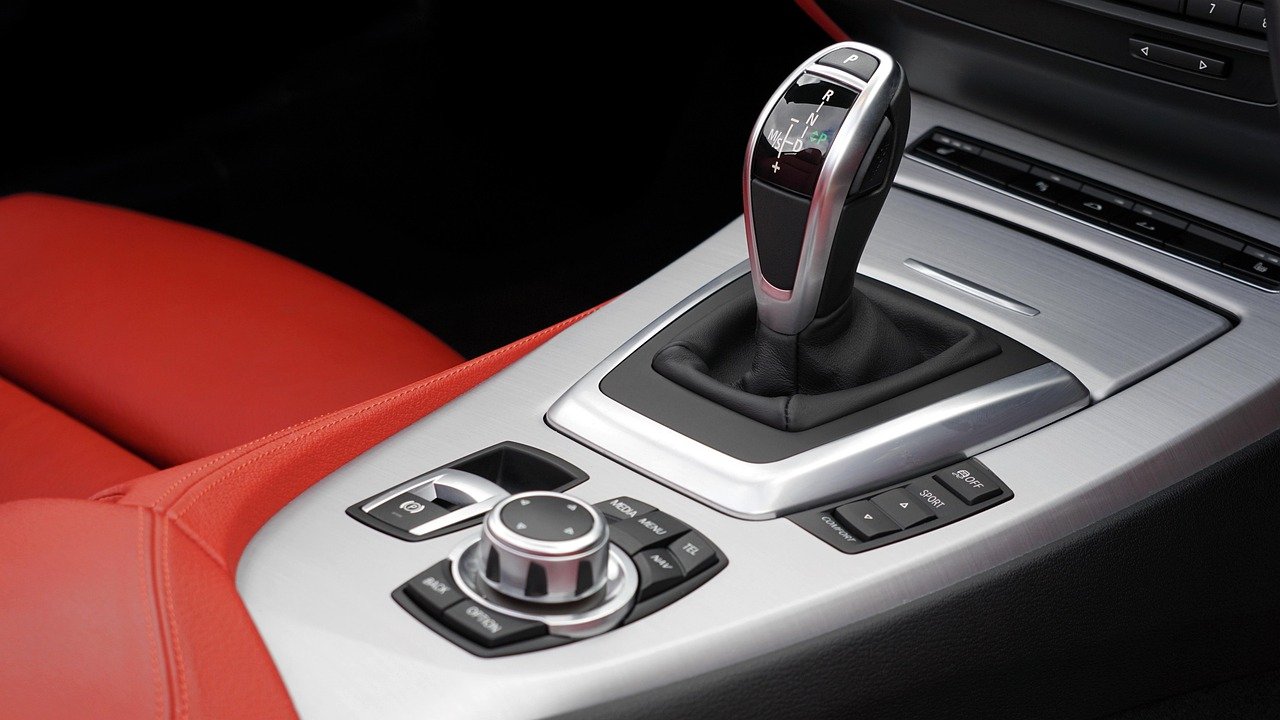
Unlike a manual transmission, an automatic transmission changes gears automatically without requiring the driver to operate a clutch pedal. The system continuously selects the most appropriate gear based on vehicle speed, engine load and throttle input.
This allows the driver to focus on steering, braking and road awareness, making automatic cars particularly suitable for urban driving conditions.
Modern automatic transmissions have improved significantly over the years. They are smoother, more reliable and more fuel-efficient than older systems, making them a practical choice for a wide range of Indian buyers.
How Does an Automatic Transmission Work?
An automatic transmission uses hydraulic systems, electronic controls or dual-clutch mechanisms (depending on the transmission type) to select the appropriate gear automatically. Instead of manually changing gears, the transmission continuously monitors driving conditions and adjusts gear ratios to deliver a balance of performance, comfort and fuel efficiency.
The result is a more relaxed driving experience, especially in congested traffic where frequent gear changes are unavoidable.
Types of Automatic Transmission
AMT (Automated Manual Transmission)
AMT is one of the most affordable automatic transmission options available in India. It is commonly offered in entry-level hatchbacks and compact cars, providing the convenience of automatic driving at a relatively low additional cost.
CVT (Continuously Variable Transmission)
CVT transmissions are known for smooth acceleration and seamless power delivery. They are particularly well suited for city driving and are often found in compact sedans and SUVs.
DCT (Dual-Clutch Transmission)
DCT gearboxes deliver quicker gear changes and improved performance. They are commonly used in premium hatchbacks, sedans and performance-oriented SUVs.
Torque Converter Automatic
A torque converter transmission is known for its smooth operation, reliability and refined driving experience. It remains a popular choice in many midsize SUVs and premium vehicles.
| Advantages of an Automatic Car | Disadvantages of an Automatic Car |
| Stress-free driving in city traffic. | Higher purchase price than manual variants. |
| No clutch pedal to operate. | Maintenance costs vary depending on the transmission type. |
| Easier for first-time drivers. | Some automatic systems may feel less engaging for enthusiastic drivers. |
| Reduced driver fatigue. | Test driving different transmission types is important before making a final decision. |
| Smooth gear changes. | |
| Increasingly fuel-efficient with modern technology. |
⭐ AutoDesiHub Recommends
If you’re buying your first car and your daily commute includes heavy traffic, an automatic variant is usually worth the additional investment. The extra convenience can make everyday driving significantly more comfortable over the years.
Automatic vs Manual Car: A Detailed Comparison
Both manual and automatic transmissions have their own strengths and weaknesses. The right choice depends on your budget, driving conditions, and personal preferences. Let’s compare them across the factors that matter most to Indian car buyers.
1. Purchase Price
For buyers with a fixed budget, the purchase price is often the deciding factor.
In most cases, a manual variant costs less than its automatic counterpart. The price difference typically ranges from ₹50,000 to ₹2 lakh, depending on the car, transmission type and manufacturer.
For example, an AMT variant usually costs less than a DCT or torque converter automatic. Premium SUVs and sedans equipped with advanced automatic transmissions can have a much larger price difference. If you’re trying to maximise features within a limited budget, choosing the manual variant may allow you to buy a higher trim level with additional safety or convenience features.
| Factor | Manual Car | Automatic Car |
| Initial Purchase Price | ✅ Lower | ❌ Higher |
| Value for Budget Buyers | Excellent | Good |
| Availability Across Variants | Wide | Increasing rapidly |
2. Fuel Efficiency
Fuel efficiency has traditionally been one of the biggest reasons buyers preferred manual cars.
Years ago, manual cars usually delivered noticeably better mileage than automatic cars. However, that gap has reduced significantly as transmission technology has improved. Modern AMTs, CVTs, DCTs and torque converter automatics are designed to optimize gear changes for better fuel efficiency. In many current models, the difference between manual and automatic variants is relatively small under standard driving conditions.
However, real-world mileage still depends on several factors, including driving style, traffic conditions, vehicle maintenance, tyre pressure and engine type.
| Factor | Manual Car | Automatic Car |
| Claimed Mileage | Slight advantage in some models | Comparable in many models |
| Real-World City Driving | Depends on driver | Often more consistent |
| Highway Mileage | Excellent | Very Good |
💡 Did You Know?
Aggressive acceleration and poor driving habits can reduce fuel efficiency far more than the choice between a manual and an automatic transmission.
3. Maintenance Cost
Maintenance costs are another important consideration, especially if you plan to keep the car for many years.
Manual transmissions generally have a simpler mechanical design, making them easier and often less expensive to service. Routine maintenance is usually straightforward, although components like the clutch may need replacement depending on driving habits.
Automatic transmissions are more complex and maintenance requirements vary depending on the transmission type. Some systems require specialized servicing and repairs can be more expensive if major components fail outside warranty. That said, a well-maintained automatic transmission can provide years of reliable service.
| Factor | Manual Car | Automatic Car |
| Routine Servicing | Usually lower | Depends on transmission |
| Repair Complexity | Lower | Higher |
| Long-Term Ownership Cost | Lower in many cases | Varies by model |
4. Driving Comfort in City Traffic
This is where automatic cars have a clear advantage.
Driving through heavy traffic requires frequent braking, clutch operation and gear changes in a manual car. Over time, this can become physically tiring, especially during long daily commutes.
An automatic transmission removes the need to operate the clutch, allowing the driver to concentrate on steering and road conditions. For people who regularly drive in cities like Ahmedabad, Bengaluru, Delhi, Mumbai, Hyderabad or Pune, this convenience can make a noticeable difference to everyday driving comfort.
| Factor | Manual Car | Automatic Car |
| Clutch Operation | Frequent | None |
| Driver Fatigue | Higher | Lower |
| Stop-and-Go Traffic | Less convenient | Highly convenient |
⭐ AutoDesiHub Recommends
If your daily commute regularly exceeds 15–20 km in heavy traffic, an automatic car is usually worth the additional investment.
5. Highway Driving
Highway driving is different from city driving. Once the car reaches cruising speed, gear changes become much less frequent. Many experienced drivers enjoy the greater control offered by a manual transmission, especially while overtaking or driving on hilly highways.
Automatic cars, however, offer smooth cruising and reduced fatigue during long journeys. Modern automatic transmissions also respond quickly when extra power is required. Ultimately, both transmission types perform well on highways, and the choice comes down to personal preference.
| Factor | Manual Car | Automatic Car |
| Driver Control | Excellent | Very Good |
| Long-Distance Comfort | Good | Excellent |
| Overtaking Confidence | Excellent | Very Good |
6. Driving on Hills
Driving on steep inclines requires good vehicle control.
Many experienced drivers appreciate manual transmissions because they can choose the exact gear required while climbing or descending hills.
Modern automatic cars often include features such as hill-hold assist and manual shift modes, making them easier to drive in hilly areas than earlier generations. If you’re confident driving a manual car, both options perform well in the hills.
| Factor | Manual Car | Automatic Car |
| Gear Control | Excellent | Good to Excellent |
| Hill Starts | Requires skill | Easier with hill-hold features |
| Driver Confidence | Depends on experience | Beginner-friendly |
7. Driving Performance
Performance is not determined by the transmission alone. Engine tuning, power output, vehicle weight and transmission calibration all play important roles.
Manual transmissions allow drivers to choose the ideal gear for acceleration, making them enjoyable for enthusiastic drivers. Modern DCT and torque converter automatics, however, deliver extremely quick gear changes and excellent acceleration in many vehicles.
| Factor | Manual Car | Automatic Car |
| Driver Involvement | Excellent | Good |
| Gear Shift Speed | Depends on driver | Very fast in modern systems |
| Overall Performance | Excellent | Excellent |
💡 Did You Know?
Many high-performance sports cars around the world now use advanced automatic transmissions because they can shift gears faster than most drivers using a manual gearbox.
8. Reliability
Reliability depends far more on the vehicle, maintenance and driving habits than simply on the type of transmission. A well-maintained manual transmission is generally known for its durability and mechanical simplicity.
Modern automatic transmissions are also highly reliable when serviced according to the manufacturer’s recommendations. Ignoring scheduled maintenance can reduce the lifespan of either transmission.
| Factor | Manual Car | Automatic Car |
| Mechanical Simplicity | Higher | Lower |
| Reliability | Excellent | Excellent with proper maintenance |
| Service Dependency | Moderate | Higher |
9. Resale Value
The Indian used-car market has traditionally favoured manual cars due to their affordability.
However, buyer preferences are changing. Demand for used automatic cars has increased significantly, particularly in metro cities where traffic congestion is common. As a result, resale value now depends more on factors such as vehicle condition, service history, brand reputation and overall demand rather than transmission alone.
| Factor | Manual Car | Automatic Car |
| Current Demand | Strong | Rapidly increasing |
| Metro Cities | Good | Excellent |
| Tier-2 & Tier-3 Cities | Excellent | Growing |
Which Transmission Should You Choose?
By now, you’ve seen how automatic and manual cars compare across different factors. However, the best choice isn’t the same for everyone.
A software engineer commuting through Bengaluru’s traffic has different needs than someone who regularly drives on highways or in hilly regions. Similarly, a first-time car buyer may prioritise ease of driving, while an enthusiast may prefer complete control.
Let’s look at which transmission suits different types of buyers.
1. Best for Daily Office Commute
If your daily commute involves heavy traffic, multiple traffic signals and slow-moving vehicles, an automatic transmission can make driving much more comfortable. Without the need to constantly press the clutch and change gears, you can focus on the road while reducing physical fatigue during long commutes.
Our Recommendation – ⭐⭐⭐⭐⭐ Automatic Car
2. Best for First-Time Car Buyers
Learning to drive is generally easier in an automatic car because there is no clutch pedal or manual gear shifting. New drivers can focus on steering, braking, mirrors and traffic awareness instead of worrying about stalling the engine.
That said, learning on a manual car can also be beneficial, as it helps drivers understand vehicle control more thoroughly.
Our Recommendation – ⭐⭐⭐⭐⭐ Automatic Car
3. Best for Families
If your car will be used by multiple family members, an automatic transmission offers greater convenience. It is easier to drive in traffic, reduces fatigue on long journeys and makes the driving experience less stressful for occasional drivers.
Our Recommendation – ⭐⭐⭐⭐⭐ Automatic Car
4. Best for Highway Drivers
If you frequently travel on highways, both transmission types perform well.
But, a manual transmission offers greater involvement and precise gear selection during overtaking, while modern automatics provide smooth cruising and relaxed long-distance driving. Drivers who enjoy being in complete control often prefer manual cars.
Our Recommendation – ⭐⭐⭐⭐ Manual Car
5. Best for Driving Enthusiasts
Many driving enthusiasts still enjoy the experience of changing gears manually. A manual transmission provides greater engagement and allows the driver to control engine RPM, gear selection and acceleration more precisely.
While modern DCT automatics offer extremely fast gear shifts, many enthusiasts still appreciate the involvement of a manual gearbox.
Our Recommendation – ⭐⭐⭐⭐⭐ Manual Car
6. Best for Hilly Areas
Driving on steep roads requires confidence and proper vehicle control. Experienced drivers may prefer a manual transmission because they can choose the exact gear while climbing or descending hills.
However, modern automatic cars equipped with hill-hold assist and manual shift modes also perform well in hilly regions.
Our Recommendation – ⭐⭐⭐⭐⭐ Manual Car
7. Best for Senior Citizens
An automatic transmission reduces physical effort because there is no clutch pedal to operate. This makes driving easier, especially in city traffic or during long journeys.
For senior citizens looking for a relaxed driving experience, an automatic car is generally the better option.
Our Recommendation – ⭐⭐⭐⭐⭐ Automatic Car
8. Best for Budget-Conscious Buyers
If you’re trying to maximise value within a limited budget, a manual car usually makes more sense.
The lower purchase price can allow you to choose a higher variant with additional safety features, or simply reduce your overall ownership cost.
Our Recommendation – ⭐⭐⭐⭐⭐ Manual Car
AutoDesiHub Recommends – Quick Version
| Buyer Profile | Recommended Transmission | Why? |
|---|---|---|
| Daily Office Commuter | Automatic | Comfortable in heavy traffic |
| First-Time Buyer | Automatic | Easier to learn and drive |
| Family Car Buyer | Automatic | Convenient for multiple drivers |
| Budget-Conscious Buyer | Manual | Lower purchase cost |
| Highway Traveller | Manual | Better driving involvement |
| Driving Enthusiast | Manual | Complete control over gear selection |
| Senior Citizen | Automatic | Less physical effort |
| Frequent Hill Driver | Manual (Experienced) / Automatic (Beginner) | Depends on driving confidence |
Decision Scorecard
| Category | Manual Car | Automatic Car |
|---|---|---|
| Purchase Price | ⭐⭐⭐⭐⭐ | ⭐⭐⭐ |
| City Driving | ⭐⭐⭐ | ⭐⭐⭐⭐⭐ |
| Highway Driving | ⭐⭐⭐⭐⭐ | ⭐⭐⭐⭐ |
| Fuel Efficiency | ⭐⭐⭐⭐ | ⭐⭐⭐⭐ |
| Maintenance Cost | ⭐⭐⭐⭐⭐ | ⭐⭐⭐ |
| Ease of Driving | ⭐⭐⭐ | ⭐⭐⭐⭐⭐ |
| Driving Enjoyment | ⭐⭐⭐⭐⭐ | ⭐⭐⭐⭐ |
| Long-Distance Comfort | ⭐⭐⭐⭐ | ⭐⭐⭐⭐⭐ |
| Beginner Friendly | ⭐⭐⭐ | ⭐⭐⭐⭐⭐ |
| Overall Convenience | ⭐⭐⭐ | ⭐⭐⭐⭐⭐ |
⭐ AutoDesiHub Recommends
There is no universally “best” transmission. If your daily driving is mostly in city traffic, choose an automatic car. If you value driver involvement, lower upfront cost and regularly drive on highways, a manual car remains an excellent choice.
Final Conclusion
Choosing between an automatic vs manual car is not about finding a universal winner—it is about choosing the transmission that fits your lifestyle.
If you spend most of your time driving through busy city roads, an automatic transmission can make every journey more comfortable and less tiring. It is particularly suitable for first-time buyers, families, and anyone who values convenience during daily commuting.
On the other hand, if you regularly drive on highways, enjoy complete control over your vehicle, or want to keep your purchase and maintenance costs lower, a manual transmission continues to offer excellent value.
The good news is that modern cars—whether manual or automatic—are more refined, efficient, and reliable than ever before. Rather than following trends, take a test drive, compare variants, and think about how you’ll use the car over the next several years.
At the end of the day, the best transmission is the one that matches your driving needs—not someone else’s opinion.
Frequently Asked Questions (FAQs)
Which is better: an automatic or a manual car in India?
It depends on how you drive. If your daily commute involves heavy city traffic, an automatic car is usually the better choice because it reduces driver fatigue. If you mainly drive on highways or prefer greater control over gear changes, a manual car remains an excellent option.
Is an automatic car worth buying in India?
Yes, especially if you regularly drive in metro cities or spend a lot of time in traffic. Modern automatic cars offer better convenience, improved fuel efficiency, and are available across almost every price segment.
Do automatic cars give lower mileage than manual cars?
Not always. Modern automatic transmissions have significantly reduced the mileage gap. In real-world conditions, driving style, traffic, tyre pressure, and vehicle maintenance often have a bigger impact on fuel efficiency than the transmission itself.
Which transmission is better for city traffic?
An automatic transmission is generally the better choice for city driving because it eliminates frequent clutch operation and gear changes, making stop-and-go traffic much less stressful.
Which transmission is better for highway driving?
Both manual and automatic cars perform well on highways. A manual transmission offers greater driver involvement, while an automatic transmission provides a more relaxed driving experience on long journeys.
Which automatic transmission is best in India?
There isn’t a single “best” automatic transmission.
AMT – Affordable and suitable for budget buyers.
CVT – Smooth for everyday city driving.
DCT – Fast gear shifts and sporty performance.
Torque Converter – Smooth, durable, and well suited for mixed driving conditions.
The right choice depends on your budget and driving style.
Are automatic cars more expensive to maintain?
Maintenance depends on the transmission type and the manufacturer’s service schedule. Routine servicing is often similar, but major repairs for some automatic systems can be more expensive than those for a manual transmission. Always check the warranty and maintenance schedule before buying.
Which is better for first-time car buyers: manual or automatic?
For most first-time buyers, an automatic car is easier to learn and drive because it allows the driver to focus on road awareness instead of clutch and gear coordination. However, if you’re on a tight budget and want to develop manual driving skills, a manual car is also a practical option.
Are manual cars becoming outdated?
No. Manual cars continue to be popular in India because they are affordable, engaging to drive, and widely available. However, the demand for automatic cars is increasing steadily as urban traffic grows.
Which transmission has better resale value?
Resale value depends more on the car’s condition, service history, brand reputation, and market demand than on the transmission alone. In metro cities, demand for used automatic cars has grown considerably in recent years.
Should I learn to drive a manual car before buying an automatic?
Not necessarily. If you know you’ll be driving an automatic car for the foreseeable future, learning on an automatic is perfectly practical. However, learning a manual gives you the flexibility to drive both types of vehicles when needed.
Which transmission is better for long-term ownership?
Both manual and automatic cars can be reliable over the long term if they are serviced according to the manufacturer’s recommendations. Choosing the right transmission for your driving pattern is more important than choosing one type over the other.